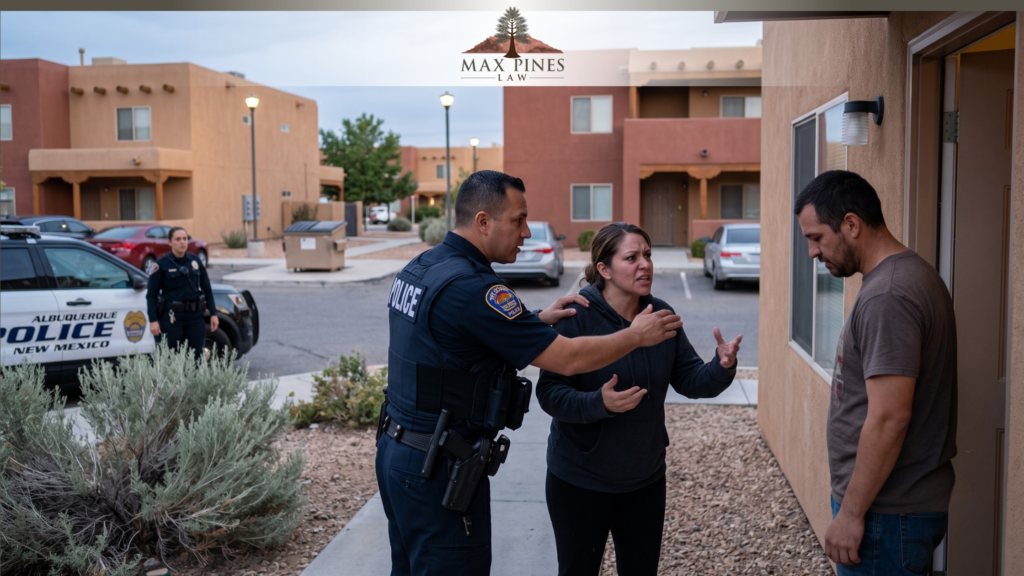
At Max Pines Law, we distinguish ourselves through our extensive experience and uniquely client-centered approach, providing premier support and exceptional results in misdemeanor defense cases.
Typical misdemeanor crimes include shoplifting, traffic offenses, and various forms of violence where great bodily harm and weapons are not involved. Those cases involving allegations of violence against an intimate partner are considered domestic violence and can have outsized collateral consequences implicating your civil rights.
Though misdemeanors have a lesser penalty than felonies, they deserve no less of a fight and should be handled seriously because of the reputational damage and collateral consequences one can suffer with a mismanaged case that led to an unnecessary conviction.
Misdemeanor cases are charged in the Metropolitan Courts all over New Mexico and in the Metropolitan Court in Albuquerque. In many towns, they are often charged in the local Municipal Courts.
Misdemeanor cases may be prosecuted by the District Attorney, but they are also brought and litigated by the police officers that make the charge.
Experience and wisdom will ensure that you get the best result. Max Pines has handled multitudes of misdemeanor cases of all types all over the State. He can help you handle your case. Retaining his counsel will quickly relieve you of the stress that comes with a criminal charge. Retaining his counsel will best position you to quickly and effectively move on from this chapter in your life while defending your rights, your liberty, and your reputation.
New Mexico law divides lower-level crimes into three categories: misdemeanors, petty misdemeanors and city code violations. Understanding the difference is important because it affects potential penalties and how your case is handled.
Misdemeanor: The more serious of the two classifications, a misdemeanor can result in up to 364 days (approximately one year) in county jail and fines up to $1,000. Common misdemeanor offenses include battery against a household member, shoplifting merchandise valued between $250 and $500, harassment, interference with communications, and first-offense DWI.
Petty Misdemeanor: The least serious crime punishable by jail time in New Mexico, a petty misdemeanor carries a maximum penalty of 182 days (approximately six months) in jail and fines up to $500. Examples include simple battery, shoplifting items valued under $250, disorderly conduct, public affray, and assault against a household member.
City Code Violations Towns may have their own laws which punish minor crimes and offenses with a maximum of 90 days of incarceration. These crimes are often brought in the local municipal courts like in Rio Rancho, Corrales, Bernalillo, Carlsbad and most other towns in New Mexico. In these idiosyncratic and often less-formal courts, there are no jury trials because the penalties are not severe enough. But these courts often surprise defendants with how serious and difficult the litigation can be.
While misdemeanors carry lesser penalties than felonies, they still deserve serious attention. A misdemeanor conviction can create lasting consequences for employment, housing, professional licensing, and your reputation.
Shoplifting: New Mexico law treats shoplifting based on the value of merchandise taken. Taking items worth less than $250 is a petty misdemeanor, while theft of merchandise valued between $250 and $500 is a misdemeanor. The law allows prosecutors to aggregate the value of merchandise stolen from a single retailer over a 90-day period, meaning multiple small thefts can be combined into more serious charges like felonies.
Battery: Simple battery involves the unlawful, intentional touching or application of force to another person when done in a rude, insolent, or angry manner. This is a petty misdemeanor. Examples include shoving, slapping, or grabbing someone during a confrontation.
Battery Against a Household Member: This domestic violence offense is more serious than simple battery. It involves the same conduct as battery but directed at a household member. A first offense is a misdemeanor, but repeat offenses against the same victim carry mandatory minimum jail sentences 48 hours for a second offense and seven days for a third offense. Anyone convicted must complete a domestic violence offender treatment program.
Disorderly Conduct: This petty misdemeanor covers violent, abusive, indecent, profane, boisterous, or unreasonably loud conduct that disturbs the peace. If someone is using excessively profane language, yelling, threatening others, or causing a public disturbance, they can be charged with disorderly conduct.
Harassment: Harassment is a misdemeanor that involves knowingly pursuing a pattern of conduct intended to annoy, seriously alarm, or terrorize another person and that serves no lawful purpose. The conduct must be serious enough that it would cause a reasonable person to suffer substantial emotional distress. This can include repeated unwanted contact, following someone, or a combination of behaviors that create fear or distress.
Public Affray: This petty misdemeanor occurs when two or more people voluntarily or by agreement engage in a fight or use violence toward each other in an angry or quarrelsome manner in a public place, causing disturbance to others. Public affray differs from battery because it involves mutual combat rather than one person attacking another.
Interference with Communications: A misdemeanor offense that often arises in domestic violence situations, interference with communications involves preventing, obstructing, or delaying communication by telephone. This commonly occurs when someone prevents a household member from calling police or emergency services during a dispute.
To learn more about defending against domestic violence charges, read: What are 3 Ways Your Domestic Violence Charge in New Mexico May Be Dismissed?
Unlike felony cases, which must be tried in district court, misdemeanor cases are handled by magistrate courts and metropolitan court depending on where the alleged offense occurred.
Magistrate Courts: New Mexico has magistrate courts in every county throughout the state. These courts have jurisdiction to conduct trials for all misdemeanors and petty misdemeanors. Magistrate courts handle cases from first appearance through trial and sentencing. Judges in magistrate courts can conduct bench trials or jury trials depending on the circumstances and the defendant’s request.
Bernalillo County Metropolitan Court: Bernalillo County (which includes Albuquerque) has a unique court system. The Metropolitan Court was established by the legislature in 1980 and consolidates the functions of the Albuquerque Municipal Court, Bernalillo County Magistrate Court, and Small Claims Court into a single operation. It is the only court of its kind in New Mexico.
Metropolitan Court handles all petty misdemeanor and misdemeanor cases in Bernalillo County, with the same jurisdictional authority as magistrate courts in other counties. The court can impose sentences up to 364 days in jail and fines up to $1,000. Metropolitan Court is a court of record, meaning all proceedings are officially recorded.
Municipal Courts These courts of limited jurisdiction and less formal rules handle only charges like DWI first offense and city code violations. They may seem like less serious venues but defendants are often surprised to find how seriously the courts are run.
Max Pines Law Serves Multiple Counties: Attorney Max Pines represents clients facing misdemeanor charges throughout central and northern New Mexico, including:
– Bernalillo County (Albuquerque) – Metropolitan Court
– Santa Fe County – Magistrate Court
– Sandoval County (Rio Rancho) – Magistrate Court
– Valencia County (Los Lunas) – Magistrate Court
– Torrance County – Magistrate Court
– McKinley County – Magistrate Court
– Cibola County – Magistrate Court
– Socorro County – Magistrate Court
– San Miguel County – Magistrate Court
– Sierra County – Magistrate Court
No matter where your case is being heard, Max Pines Law can provide experienced defense representation in your local magistrate or metropolitan court.
Understanding the timelines in your misdemeanor case is critical because missed deadlines can affect your defense strategy and prosecutors’ failure to meet deadlines can result in dismissal of charges.
Statute of Limitations: Prosecutors must file charges within specific time limits after the alleged offense:
– Misdemeanors: Two years from the date the crime was allegedly committed
– Petty Misdemeanors: One year from the date the crime was allegedly committed
If prosecutors wait too long to file charges, your attorney can move to dismiss the case based on the expired statute of limitations.
The Rule – Trial Deadline: The most important timeline in any misdemeanor case is “the Rule.” Trial must commence within 182 days (approximately six months) after your arraignment. This is a firm deadline. If the prosecution fails to bring your case to trial within this timeframe, the charges must be dismissed.
Attorneys and judges commonly refer to this as “the Rule” because of how critical it is to misdemeanor proceedings. Your defense attorney can waive this deadline and agree to continuances, but absent such consent, courts hold this timeline strictly. An experienced defense attorney will vigilantly enforce the Rule and file appropriate motions when the prosecution fails to meet the deadline.
Why This Matters: Prosecutors often have heavy caseloads, and cases can slip through the cracks. If your attorney is not paying attention to deadlines, you could miss an opportunity for dismissal based on the state’s failure to bring you to trial within six months.
For a comprehensive discussion of misdemeanor timelines, read our detailed guide: Timeline and Important Deadlines for Misdemeanor and Petty Misdemeanor Cases in New Mexico
Driving While Intoxicated (DWI) is one of the most common misdemeanor charges in New Mexico and carries both standard criminal penalties and mandatory administrative consequences.
Criminal Penalties: A first-offense DWI is a misdemeanor with the following maximum penalties:
– Up to 90 days in jail
– Fines up to $500
– Court costs of approximately $200
However, judges have discretion to impose suspended or deferred sentences, meaning you may not serve jail time if you comply with probation conditions.
Mandatory Requirements: Even for a first offense, New Mexico law requires:
– Ignition Interlock Device (IID): You must install an IID on your vehicle for one year. This device requires you to provide a breath sample before the vehicle will start.
– DWI School: You must complete an approved DWI education program.
– Alcohol Screening: You must undergo alcohol screening and comply with any treatment recommendations.
– Community Service: You must complete 24 hours of community service.
– Driver’s License Revocation: Your license will be revoked, though you may be eligible for an ignition interlock license.
– Probation: You will be placed on probation, typically for one year, with monthly supervision fees.
Aggravated DWI: If your first-offense DWI is classified as “aggravated” (typically involving a blood alcohol concentration of 0.16 or higher), you face a mandatory minimum of 48 consecutive hours in jail.
Why These Penalties Matter: While a first-offense DWI is “only” a misdemeanor, the mandatory consequences are substantial and expensive. The ignition interlock requirement alone can cost thousands of dollars over the course of a year. These penalties affect your ability to work, support your family, and maintain your independence.
An experienced DWI defense attorney can challenge the traffic stop, the field sobriety tests, breath or blood test results, and other elements of the prosecution’s case. Even when conviction seems likely, negotiating for the best possible disposition can make an enormous difference in the impact on your life.
Yes. While misdemeanors carry less severe penalties than felonies, a conviction can still create significant barriers in your life.
Employment Consequences:
– Misdemeanor convictions appear on background checks conducted by most employers
– Many employers have policies against hiring individuals with criminal records, even for misdemeanors
– Professional licensing boards may deny or revoke licenses based on misdemeanor convictions, particularly those involving dishonesty, violence, or substance abuse
– Government jobs, positions working with vulnerable populations, and jobs requiring security clearances may be unavailable
– Even if not automatically disqualified, you may need to explain the conviction in job applications and interviews
Domestic Violence Convictions: Misdemeanor domestic violence convictions carry particularly serious collateral consequences:
– Federal Firearm Ban: Anyone convicted of a misdemeanor crime of domestic violence is prohibited from possessing firearms under federal law, even if the state conviction would not otherwise restrict gun rights
– Child Custody and Visitation: Domestic violence convictions can be used against you in family court proceedings
– Immigration Consequences: Non-citizens can face deportation based on domestic violence convictions
Housing: Landlords routinely conduct background checks and may refuse to rent to individuals with criminal records, even misdemeanors.
Reputation and Community Standing: In smaller communities, criminal convictions can damage your reputation and affect personal relationships, business opportunities, and community involvement.
Duration: Without intervention, misdemeanor convictions remain on your record indefinitely. They appear in background checks for employment, housing, professional licensing, and other purposes.
Record Relief: New Mexico’s expungement law allows sealing of many misdemeanor convictions after appropriate waiting periods. More importantly, obtaining a conditional discharge avoids a conviction altogether, eliminating these collateral consequences from the start.
Probation violations can result in the imposition of jail time that was previously suspended and can convert a conditional discharge into a conviction.
Types of Violations:
– Technical Violations: Failing to meet probation conditions such as missing meetings with your probation officer, testing positive for drugs or alcohol, failing to complete community service, not paying fines or costs, traveling without permission, or failing to attend required treatment
– New Criminal Charges: Being arrested or charged with a new offense while on probation
The Probation Violation Process: When your probation officer believes you have violated conditions:
1. Notice of Violation: Your probation officer files a notice of violation with the court
2. Probation Violation Hearing: The court schedules a hearing where the prosecution must prove you violated probation conditions
3. Lower Burden of Proof: Probation violations are proven by a “preponderance of the evidence” (more likely than not), which is easier for the prosecution than the “beyond a reasonable doubt” standard required for criminal convictions
4. Your Rights: You have the right to be represented by an attorney, to present evidence and testimony, and to challenge the alleged violations
5. Possible Outcomes: If the judge finds you violated probation, several options exist:
– Continue probation with the same conditions (warning)
– Modify probation conditions (make them more strict)
– Impose short jail sanctions (such as weekends or 30 days)
– Revoke probation entirely and impose the original suspended jail sentence
– If you received a conditional discharge, enter a conviction and impose sentence
Conditional Discharge Risk: If you received a conditional discharge, a probation violation is particularly serious. The court can enter an adjudication of guilt (conviction) and sentence you to jail time, eliminating the benefit of the conditional discharge. This converts what would have been no conviction into a permanent criminal record.
Best Practices to Avoid Violations:
– Take probation conditions seriously from day one
– Attend all scheduled meetings with your probation officer
– Complete community service and treatment programs well before deadlines
– Stay in communication with your probation officer about any difficulties complying with conditions
– If you’re struggling financially to pay fines or costs, communicate with your probation officer and attorney about modification rather than simply not paying
– Avoid any contact with law enforcement or situations that could result in new charges
– If accused of violations, contact your attorney immediately
Many probation violations can be resolved without revocation if addressed proactively and with experienced legal representation.
While misdemeanors are less serious than felonies, you absolutely should have experienced legal representation. Here’s why:
Conviction Consequences Are Real: Even though a misdemeanor conviction doesn’t result in years in prison, it creates a permanent criminal record that affects employment, housing, professional licensing, and your reputation. For many people, a criminal record is more damaging than a short jail sentence.
Avoiding Conviction Is Possible: An experienced criminal defense attorney can often negotiate dispositions that avoid conviction entirely, such as conditional discharge, or can negotiate for dismissal of charges. Without an attorney, you may plead guilty unnecessarily and suffer permanent consequences that could have been avoided.
Technical Defenses Exist: Many misdemeanor cases can be won on technical grounds—illegal stops, improper searches, violations of constitutional rights, insufficient evidence, witness credibility problems, or procedural errors by law enforcement or prosecutors. Most defendants lack the legal knowledge to identify and raise these defenses.
Timelines and Deadlines Matter: As discussed above, prosecutors must bring your case to trial within 182 days or face dismissal. An experienced attorney monitors these deadlines religiously and files motions to dismiss when the prosecution fails to comply. Without an attorney, you might not even know this deadline exists.
Prosecutors Take Cases More Seriously with Representation: When you appear without an attorney, prosecutors know you’re unlikely to go to trial and will offer less favorable plea agreements. When you’re represented by an experienced trial attorney, prosecutors know they must offer reasonable deals or face the possibility of losing at trial.
Domestic Violence Cases Are Complex: Domestic violence misdemeanors involve relationship dynamics, potential Orders of Protection, mandatory treatment programs, and serious collateral consequences including federal firearm prohibitions. These cases require attorneys who understand both the criminal law and the family law implications.
Max Pines Law has extensive experience defending misdemeanor cases throughout New Mexico. We understand local court procedures, have relationships with prosecutors in multiple counties, and know how to achieve the best possible outcomes for our clients.
For more insight into when you need a criminal defense attorney, read: When Your Family Needs a Criminal Defense Attorney: Understanding Quality Legal Representation
Additional Resources
Learn more about criminal defense topics on our blog:
– Misdemeanor Cases Overview
– Timeline and Important Deadlines for Misdemeanor and Petty Misdemeanor Cases
– Conditional Discharges in New Mexico
– What are 3 Ways Your Domestic Violence Charge in New Mexico May Be Dismissed?
– What is a Preliminary Hearing?
– Should I waive my prelim?
– Motions in New Mexico Criminal Cases
– Understanding New Mexico’s Habitual Offender Enhancement
While misdemeanor charges may seem less serious than felonies, they deserve serious attention. A misdemeanor conviction creates a permanent criminal record that can affect your employment, housing, professional licensing, and reputation for years to come.
At Max Pines Law, we provide experienced, aggressive defense for people facing misdemeanor charges throughout New Mexico. Attorney Max Pines practices in Bernalillo County Metropolitan Court and magistrate courts in Santa Fe, Sandoval, Valencia, Torrance, McKinley, Cibola, Socorro, San Miguel, and Sierra Counties.
Whether you’re facing shoplifting charges, battery, domestic violence allegations, DWI, harassment, or any other misdemeanor offense, we fight to protect your rights and achieve the best possible outcome whether that’s dismissal, conditional discharge, or another favorable resolution.
Contact us today for a confidential consultation about your misdemeanor case.
This FAQ provides general information about misdemeanor cases in New Mexico and does not constitute legal advice. Every case is unique, and outcomes depend on specific facts and circumstances. For advice about your particular situation, consult with a qualified criminal defense attorney.