Handling a criminal or civil rights case in the spotlight does not change the core way I litigate—but it absolutely adds an extra layer of work, strategy, and emotional weight for my clients and me. Media attention becomes another fact in the case: something we must manage thoughtfully, ethically, and in a way that serves the client’s real goals, not the news cycle.maxpineslaw+2
Do you actually want publicity?
The first principle in any high‑profile matter is simple: we slow down and decide whether the client wants attention or wants privacy. In many serious criminal and civil rights cases, the underlying facts are deeply personal, traumatic, or embarrassing—mental health struggles, family crises, prior victimization, or allegations that can stain a person’s name even if they are ultimately cleared—so it is perfectly reasonable for a client to want as little publicity as possible.
At the same time, there are cases where shining a light helps. When a public narrative is distorted or incomplete, or when a powerful institution has mistreated someone, careful engagement with the media can correct false impressions and ensure the case gets the attention it deserves. A client may want the world to know they were wrongfully accused, that police crossed the line, or that the system failed them in a way that should never happen again.
When public attention becomes part of healing
In civil rights litigation, publicity can be part of the path to healing and accountability. I have represented clients in cases where government agencies and powerful entities were called to answer for misconduct, and my clients did not just want a quiet resolution—they wanted their stories heard and their rights publicly vindicated.
Sometimes the most powerful moment in a client’s life is public: a not‑guilty verdict announced in a courtroom full of observers, a new sentence that finally reflects their humanity, or an opinion from an appellate court recognizing their rights and the wrong done to them. As my firm materials note, I have stood by clients in high‑profile homicide and serious felony trials, in front of juries and cameras, and continued to defend them publicly even after acquittal when the community still had questions. For those clients, being heard and recognized is as important as the legal result.
When privacy and protection come first
There are other cases where the best service I can provide is to shield my client as much as possible. Survivors of abuse, clients with sensitive immigration concerns, or families grieving a tragic loss may have more to lose than to gain from attention, even if their story is compelling.
In those matters, we focus on minimizing identifying details in public filings where the law allows, resisting unnecessary spectacle in court, and declining media invitations that would expose the client to more pain. New Mexico’s rules of evidence and procedure give courts tools to balance openness with privacy—controlling what exhibits the jury sees, managing references to certain sensitive information, or addressing some issues outside the jury’s presence—and I use those tools aggressively when my client’s safety or dignity is at stake.
Media as an extra layer, not a new rulebook
One thing I emphasize to clients: media attention does not change the law, the rules of evidence, or the judge’s job. It does not change how I cross‑examine a witness, craft a legal argument, or preserve an issue for appeal—but it does add an additional layer of work and consideration that we have to take seriously.11-18-25_chapter-30-criminal-offenses-2025.pdf+1maxpineslaw+1
That extra layer includes:
-
Preparing clients and witnesses for the reality that proceedings may be reported, quoted, and posted online.m
-
Reviewing what can ethically be said publicly, and by whom, so we do not jeopardize a fair trial.
-
Anticipating how coverage might affect jurors, potential jurors, or future negotiations, and adjusting strategy where necessary (for example, voir dire focused on pre‑trial publicity or careful motion practice about sensitive evidence).
Examples from my own media cases
My practice has included a series of cases that drew local and statewide attention: high‑profile murder and homicide trials, re‑sentencings in old homicide cases, a fatal street‑racing crash, and major civil rights fights involving law enforcement and governmental overreach. In one heavily covered murder trial, I stood beside my client as the jury announced a favorable result—and then continued to defend him publicly when questions lingered in the community, explaining in a careful, ethical way why the outcome was consistent with the evidence and the law.
In another serious homicide matter, initial news reports painted a stark, one‑sided picture of my client. As the case unfolded, we challenged that narrative in the courtroom—through investigation, cross‑examination, and legal argument—and ultimately secured a far more humane outcome than anyone expected. My media role there was not to relitigate the case on camera, but to give the public enough context to understand that the person they had seen in headlines was more than a caricature: a human being, with a complex story, who had rights the system was obligated to respect.
I have also been interviewed about the risks of governmental overreach in sting operations and enforcement actions, reminding the public that constitutional protections matter even when the conduct at issue is unpopular. In those situations, media attention becomes a way to educate the community about broader legal principles, not just to comment on a single client’s case.
Trials, cameras, and staying composed
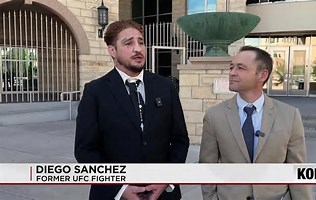
The recent sentencing of Diego Sanchez in Albuquerque—where he was given five years of supervised probation and community service for firing a gun from a Jeep in traffic—shows how quickly a criminal case can become a media event. Reporters focused on the contrast between a famous fighter’s public persona and a dangerous choice made in a moment, and on the tension between calls for prison time and the court’s ultimate decision.
When I stand next to a client in a similarly visible case, whether it is a homicide, a DWI with serious injury, or a civil rights suit that makes waves, my task is to remain calm and centered on the work in front of me: the next witness, the next motion, the next question from the bench. Cameras, packed galleries, and social‑media commentary cannot be allowed to change how I try a case; they simply mean I must be even more disciplined, because everything is under a microscope.
Ethics, fairness, and the court of public opinion
New Mexico’s ethical rules place real limits on what lawyers may say publicly about pending cases, especially when comments could materially prejudice an adjudicative proceeding. That means I cannot and will not reveal confidential information, speculate about evidence, or play to the crowd just because a case is getting clicks.m_const_2025.pdf+2
Instead, where a public response is appropriate, it focuses on fundamentals: my client’s presumption of innocence, respect for the court’s process, the importance of decisions being based on evidence and law rather than rumor, and the need to protect the dignity of everyone involved. I am always aware that a case must be decided in a courtroom, not in the comments section, and that my first duty is to safeguard my client’s right to a fair trial rather than to “win” the media narrative.
Public justice in a public system
Our system is built on the idea of public and open proceedings; judges in New Mexico generally conduct trials and major hearings in courtrooms that anyone—including the media—can attend. That openness is a protection against secret justice, but it also means that when something goes wrong—when a person is wrongfully accused, when someone’s rights are violated, or when a tragedy is more complicated than it first appears—the story will not stay hidden.
For some clients, that is frightening, and we work carefully to minimize unnecessary exposure. For others, it is an opportunity: the chance to have the truth recognized not just by a judge or jury, but by their community—a chance at redemption, at public acknowledgment of a wrong, or at showing that they are more than their worst day. My role in high‑profile criminal and civil rights cases is to navigate that tension with them, step by step, so that every public moment serves the same goal as every private strategy session: protecting their rights, their future, and their humanity.
If you are facing charges or a civil rights violation in New Mexico and you are worried about how publicity, social media, or the news might affect your case, Max Pines Law is built to handle both the courtroom battle and the public pressure, adding that extra layer of care without ever losing sight of the litigation itself.maxpineslaw+1