An Albuquerque criminal defense attorney explains why dismissal is possible in some cases—but why it is never the place to begin.
One of the first questions people ask me after a DWI arrest is, “Can my case be dismissed?”
I understand why.
A DWI arrest is frightening. For many people, it is their first encounter with the criminal justice system. They are worried about their driver’s license, their job, the financial impact, and whether one mistake is about to define the rest of their lives. In that moment, it is natural to want certainty. People want someone to tell them that everything is going to be okay.
Unfortunately, certainty is not something an honest criminal defense lawyer can promise.
What I can promise is something different: that I will carefully examine every part of the government’s case before offering advice about where it is likely to go.
That approach gives my clients something more valuable than false reassurance: an honest assessment of their case and a strategy built around the facts, the law, and the next steps available to them.
The Wrong Question
I don’t actually begin by asking whether a DWI can be dismissed.
I begin with a much simpler question.
What happened?
That may sound obvious, but it is remarkable how often people—including police officers, witnesses, lawyers, and sometimes even defendants—begin reaching conclusions before carefully reconstructing the events themselves.
Every DWI case tells a story.
Where did the officer first observe the vehicle?
Why was the stop initiated?
What did the officer see, hear, and smell?
What happened during the field sobriety tests?
Was a breath or blood test requested? Was it administered correctly?
Do the body camera footage, dash camera footage, police reports, and witness statements tell the same story—or different ones?
Those questions matter because criminal cases are built from facts, not assumptions.
A Dismissal Is the Result of Careful Work—Not Wishful Thinking
People sometimes imagine that dismissals happen because of one dramatic mistake.
Television encourages that impression.
In reality, many successful outcomes come from something much less dramatic: careful, methodical investigation.
Sometimes an officer lacked reasonable suspicion to initiate the traffic stop.
Sometimes constitutional issues arise during the investigation.
Sometimes scientific evidence deserves closer examination.
Sometimes witness accounts conflict.
Sometimes the prosecution simply cannot prove every required element of the offense beyond a reasonable doubt.
Sometimes none of those things are present.
No lawyer can know which category your case falls into until they have done the work.
Experience Changes the Questions You Ask
People sometimes think experience means having seen a lot of DWI cases.
It certainly includes that.
But experience also changes the questions you know to ask.
Over time, you learn that small details can become important.
A few seconds on body camera footage.
An inconsistency between two reports.
A missing foundation for evidence.
A procedural shortcut.
None of those observations guarantees a dismissal. But they are exactly the kinds of details that deserve careful attention before anyone starts making predictions about the outcome of a case.
Maria*
None of this is abstract to me. I think of a client I will call Maria.
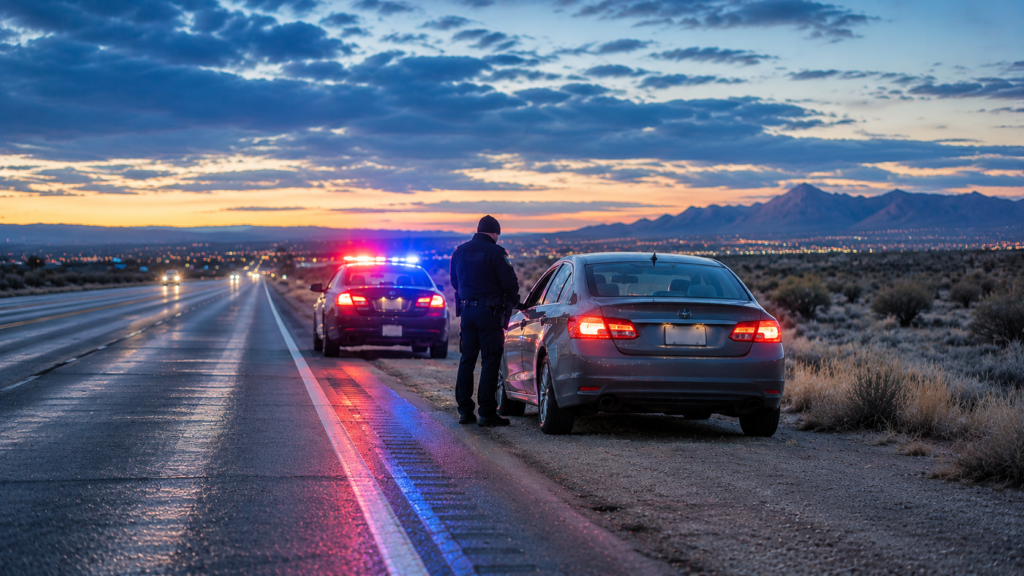
She was stopped late on a Friday night, a few blocks from her own driveway, for what the officer’s report described as “weaving within the lane.” She had not been drinking. She had been driving home from a twelve-hour shift, reached for a dropped phone, and overcorrected.
By the time she sat across from me, she had already convinced herself the case was hopeless. She had failed the field sobriety tests, she told me—of course she had. She was exhausted, barefoot in dress shoes she’d taken off hours earlier, asked to walk a straight line on a dark shoulder of road at one in the morning.
I asked for the body camera footage.
The footage told a more complicated story than the report did. The stated reason for the stop did not match what the video showed in the seconds before the lights came on. The officer’s instructions during the field sobriety tests were inconsistent with standard protocol—given too quickly, on a slope the report never mentioned.
None of it was dramatic. No single moment would make a good scene in a courtroom drama. But taken together, it was enough to challenge whether the stop was lawful in the first place.
The case did not end in a dismissal because of one clean revelation.
It ended because no one involved was willing to accept the police report as the final word about what had happened.
The case ended the way it did because we did the work of finding out what actually happened—and it turned out that what actually happened was not what the report said.
I share Maria’s story not because every case ends this way. Many do not. I share it because she is a good example of the only thing I can promise: not an outcome, but an honest, careful look at what the evidence actually shows.
The Goal Is the Best Possible Outcome
This may sound surprising, but I do not define success by whether a case is dismissed.
Of course, dismissal is an excellent outcome when the facts and the law support it.
But my responsibility is broader than that.
My responsibility is to pursue the best outcome available for my client after carefully evaluating the evidence, understanding my client’s goals, and developing a strategy that fits the realities of the case.
Sometimes that strategy involves litigating aggressively.
Sometimes it involves negotiation.
Sometimes it involves taking a case to trial.
The important point is that those decisions should be based on thoughtful analysis—not wishful thinking or fear.
So…Can Your DWI Be Dismissed?
Maybe.
But that is not where an experienced defense lawyer begins.
The better question is whether the prosecution can prove every element of the charge while respecting the constitutional protections that apply to every person accused of a crime.
The answer to that question requires careful investigation, legal analysis, and experience—the same kind of work that turned Maria’s case around. To read about an example of a client of mine whose DWI was dismissed due to missing body camera footage, check out this blog I wrote: Preserving Evidence in DWI Investigations: Celebrating a Defense Win – Max Pines Law
No two DWI cases are exactly alike. Some become stronger for the prosecution as the evidence develops. Others become weaker. The only way to know the difference is through careful investigation, thoughtful legal analysis, and experience.
If you have been arrested for DWI in New Mexico, the most important thing you can do is speak with an attorney before making assumptions about how your case will end.
Every case deserves an individualized evaluation. That evaluation is where good criminal defense begins.
If You’ve Been Arrested for DWI in New Mexico
The hours and days after a DWI arrest are often filled with uncertainty. You may be wondering whether your license will be suspended, what happens at your first court appearance, or whether the charge can be challenged.
The first step is not to assume the outcome—good or bad. It is to understand what actually happened and how the law applies to your specific case.
At Max Pines Law, every DWI case begins with a careful review of the facts, the evidence, and your goals. If you have been charged with DWI anywhere in New Mexico, call (505) 226-2249 to schedule a free consultation. We’ll listen to your story, answer your questions honestly, and help you understand your options before you decide what comes next.