Defending Serious Sex-Offense Cases Across New Mexico: Why Local Knowledge Matters
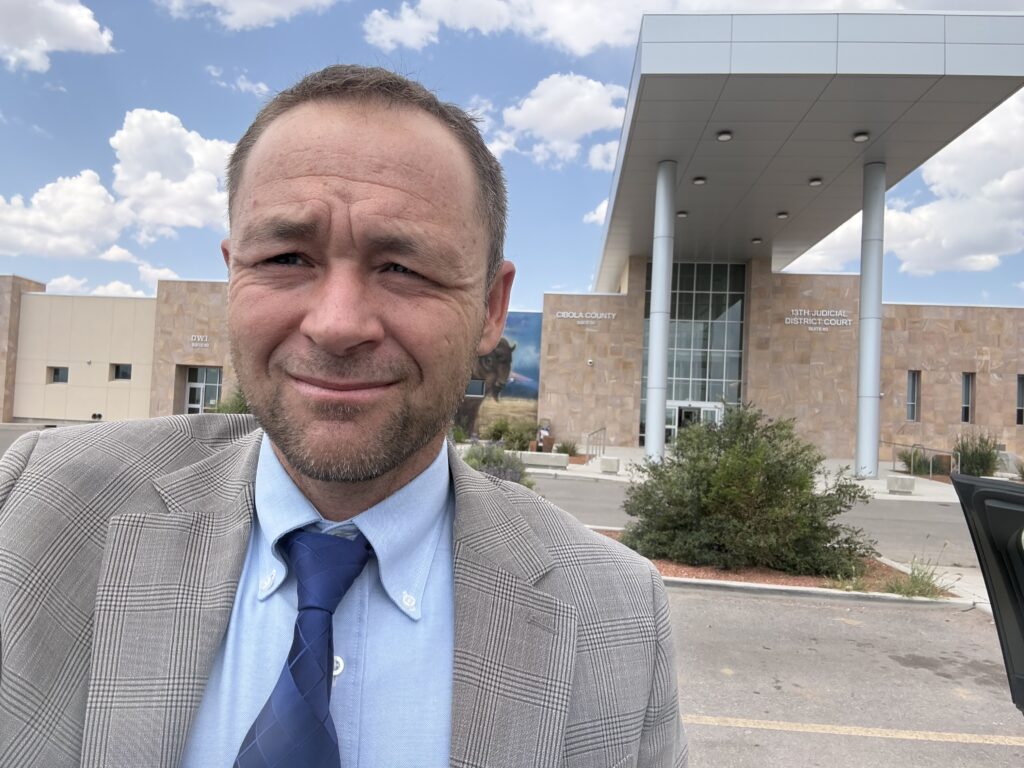
Recently, I found myself standing outside the Cibola County District Court in Grants, New Mexico, after finishing a hearing for a client.
It was a good reminder of one of the things I value about owning and operating Max Pines Law: our work takes us throughout New Mexico, and people facing serious criminal accusations need strong representation regardless of whether their case is in Albuquerque or in a smaller community.
I represent people accused of serious offenses in different parts of the state, including cases involving sexual-offense allegations, sexual exploitation of children—often referred to as child pornography—electronic solicitation, internet-related offenses, and other cases involving computers, phones, social media, or digital evidence.
These are cases where the stakes can be enormous.
And in my experience, where the case is being prosecuted can matter almost as much as what the case is about.
Serious Allegations Can Be Especially Difficult in Smaller Communities
An accusation involving a sexual offense can cause tremendous damage before a case ever reaches trial.
That problem can become even more pronounced in a smaller community.
People know one another. Information travels quickly. A serious accusation may move through workplaces, families, social circles, schools, law enforcement agencies, and the local rumor mill long before all of the evidence has been examined.
An allegation can very quickly become treated as a fact.
But an accusation is not a conviction.
A police report is not the whole story.
And the most inflammatory version of an allegation is not necessarily the most accurate one.
That is one reason I believe these cases require a defense lawyer who is willing to investigate deeply and resist the pressure to simply accept the government’s initial characterization of what happened.
Every New Mexico Courthouse Has Its Own Rhythm
I handle cases in Albuquerque, but my practice also takes me to communities such as Grants in Cibola County, Estancia and other communities in Torrance County, and courts elsewhere throughout New Mexico.
The law may be statewide, but the practice of law is intensely local.
Different courts have different procedures, expectations, personalities, scheduling practices, and customs. Prosecutors’ offices have different approaches to charging and resolving cases. Judges may emphasize different issues. Even the mechanics of moving a case through the system can vary substantially from one jurisdiction to another.
A good defense attorney needs to understand those differences.
When I take a case in another county, I work to understand the jurisdiction I am practicing in: how the court functions, how cases move through the system, how the prosecution approaches the particular type of allegation, and what arguments are likely to matter.
That does not mean relying on special relationships or expecting special treatment.
It means doing the homework necessary to advocate effectively in the court where the client’s life is actually being decided.
Technology Has Changed Sex-Offense Defense
Many modern sex-offense prosecutions are also technology cases.
Cases involving allegations of possession of child sexual abuse material, sexual exploitation of children, electronic solicitation, online communications, or similar offenses can turn on evidence contained in:
- cell phones;
- computers and hard drives;
- cloud accounts;
- text messages;
- social media;
- messaging applications;
- photographs and video;
- internet history;
- IP-address information;
- account records; and
- forensic examinations performed by law enforcement.
That makes technological literacy extremely important.
It is not enough to read the detective’s summary and assume that the digital evidence says what the government claims it says.
A defense lawyer has to ask more questions.
Who possessed the device? Who had access to it? What does the forensic examination actually establish? What does it not establish? What is the timeline? What was intentionally downloaded or transmitted, and what might have been automatically cached or stored? What do the surrounding conversations show? Were searches, seizures, warrants, interviews, and forensic examinations conducted lawfully?
Sometimes the details support the government’s theory.
Sometimes they substantially change it.
In either event, the defense attorney needs to understand the evidence well enough to find out.
Investigation Is Only Part of the Defense
The other side of a serious criminal case is understanding the human being accused of the crime.
I recently handled a matter at the Cibola County District Court in Grants where a strong investigation combined with a detailed mitigation presentation helped us obtain a favorable resolution for our client.
The important part was not pretending that difficult facts did not exist.
It was showing that the case was more complicated than the initial accusations suggested—and that our client was much more than the worst interpretation of the allegations against him.
That distinction can matter enormously.
A persuasive defense may include challenging the evidence, litigating legal issues, investigating witnesses, analyzing digital evidence, and preparing for trial.
But in the appropriate case it may also involve explaining a client’s history, treatment, family relationships, employment, accomplishments, mental health, rehabilitation, remorse, or other circumstances that a charging document simply cannot capture.
My job is to determine which approach—or combination of approaches—best serves that particular client.
You Should Not Be Defined by an Accusation
Sexual-offense allegations carry a degree of stigma that few other criminal charges do.
People can lose jobs, relationships, professional licenses, reputations, and standing in their communities simply because an accusation has been made. A conviction can bring prison exposure, probation, sex-offender registration requirements, restrictions on where a person can live or work, and consequences that may last for years.
That is precisely why these cases deserve careful, sophisticated defense work.
I do not believe that a defense lawyer’s role is to contribute to the hysteria surrounding an accusation.
The role is to slow the process down, examine the evidence carefully, understand the law, understand the jurisdiction, and make sure the client is treated as a human being rather than a headline.
Criminal Defense Throughout New Mexico
One of the things I appreciate most about private practice is that my work has taken me well beyond one courthouse.
Whether I am appearing in federal court in Albuquerque, driving to Grants for a case in Cibola County, handling a matter in Torrance County, or traveling elsewhere in New Mexico, every community presents a slightly different environment.
I enjoy learning those environments.
More importantly, I believe that understanding them makes me a better advocate for my clients.
When somebody is facing an accusation that could fundamentally change the course of his or her life, that person deserves a lawyer who is willing to investigate the facts, understand the technology, learn the jurisdiction, challenge assumptions, and fight to make sure the entire story is heard.
That is the work we try to do at Max Pines Law.
Every criminal case is different, and past results do not guarantee a particular outcome in another case.