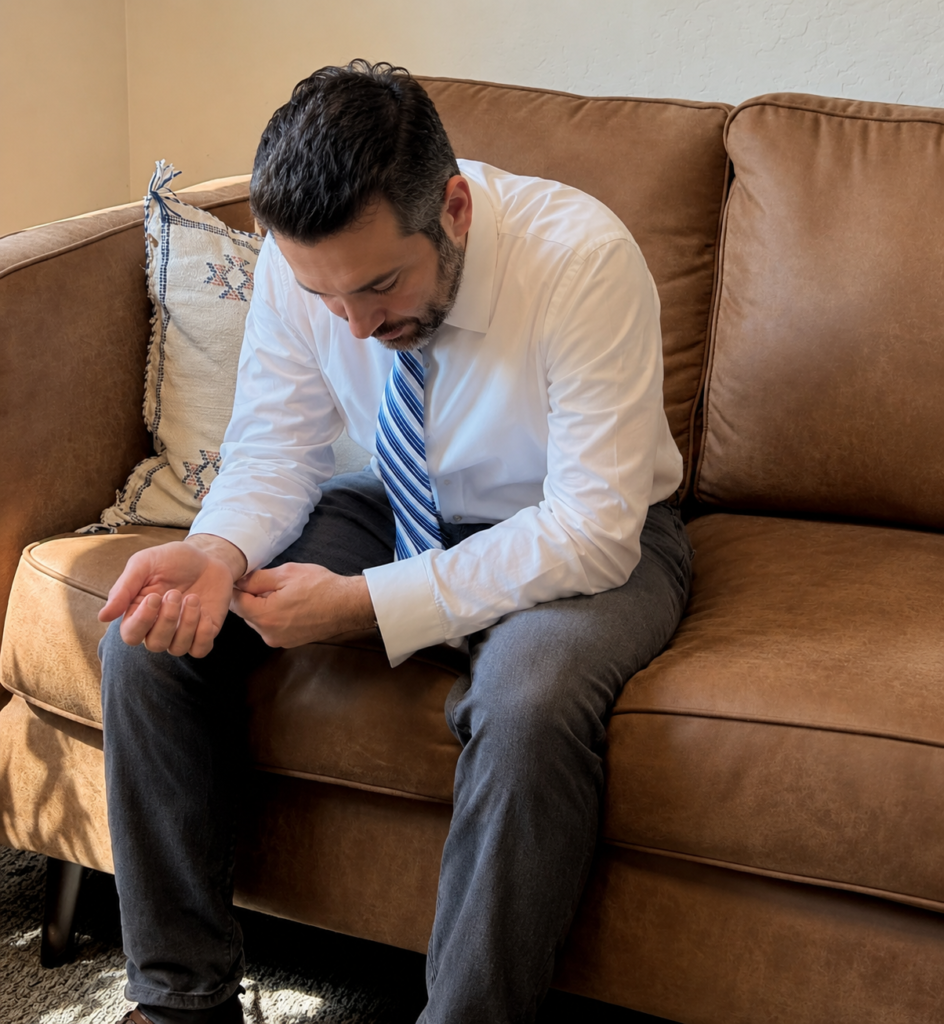
Being accused of a sexual offense can change your life before you are ever charged with a crime. A detective may call asking to “hear your side.” Police may show up with a search warrant. You may learn that someone has made an allegation against you through a family member, an employer, or another person involved in the situation. Sometimes, however, a person does not realize the investigation has progressed until law enforcement makes an arrest.
Whatever the circumstances, many people have the same immediate instinct: they want to explain what happened. They believe that if they can just tell the police, the person making the accusation, their family, or someone else the whole story, the misunderstanding will be cleared up. That instinct is understandable, but it can create serious problems.
It is also important to understand that an accusation, an investigation, a criminal charge, and a conviction are very different things. An allegation may result in no criminal case at all, an investigation without charges, a summons, an arrest, a criminal complaint, a grand-jury proceeding, or a preliminary examination. The facts of the particular case and the decisions made by law enforcement and prosecutors determine what happens next.
An Accusation Is Not a Conviction
Sexual-offense allegations carry a stigma that is different from almost any other criminal accusation. People often react to the allegation itself as though there has already been a trial. Family relationships can change, employers can become involved, friendships can fracture, and in smaller New Mexico communities an accusation can spread quickly. Law-enforcement agencies may also publicize arrests through social media, which can make the stress and damage to a person’s reputation even worse.
None of that changes the basic fact that an accusation is still just an accusation. A police report is not a verdict, and the first version of events given to law enforcement is not necessarily the complete story. The allegation has to be investigated carefully to understand what is accurate, what may be missing, and what the law actually says about what happened.
Sexual-offense cases can involve questions about consent, memory, intoxication, relationships, digital communications, motive, identification, and forensic evidence. Some allegations prove inaccurate or incomplete. Others involve people who remember or interpret the same event very differently. In some cases, the dispute is not about whether sexual contact occurred, but about what happened during that contact and whether it meets the legal definition of the charged offense.
One of the most important jobs of a defense lawyer in a serious case is to slow the process down enough to examine what the evidence actually shows. That may include interviewing witnesses, reviewing digital communications and other evidence, identifying information that was overlooked in the initial investigation, and helping you stay grounded enough to make thoughtful decisions about your case. Serious criminal charges can create enormous fear and pressure, and good representation should help you understand both the evidence and the choices in front of you.
You May Be Under Investigation Before You Are Ever Charged
A sexual-offense investigation may take place for weeks or months before an arrest. During that time, detectives may interview witnesses, obtain records, examine text messages or social-media communications, seek search warrants, review phones and computers, or gather other evidence.
Investigators may also contact the person they suspect and ask for an interview. Sometimes the request sounds informal and even friendly. A detective may say that there are “two sides to every story” or that this is the accused person’s opportunity to explain what really happened.
It is tempting to explain what really happened. Most of us trust our ability to make another person understand our side of the story. But in a criminal investigation, doing that without first talking to a lawyer can be a serious mistake.
You should not assume that the detective is beginning the investigation with your interview. By the time law enforcement asks to speak with a suspect, officers may already have interviewed other people and developed a theory of the case. A question that seems casual may be based on information the detective already has.
As a general rule, do not agree to a law-enforcement interview before you have spoken privately with a criminal-defense lawyer. You have the right to remain silent, and you have the right to talk with a lawyer before deciding whether speaking with investigators is in your best interest.
Trying to Fix the Situation Yourself Can Make It Worse
When someone learns that they have been accused of a sexual offense, panic can take over. People start calling friends, looking through old messages, contacting the person who made the accusation, or trying to reconstruct every detail of what happened. They may send an apology for something unrelated, ask another person to intervene, or write a long message explaining their side of the story.
Those actions can become evidence. Do not attempt to pressure, persuade, or confront the person making the allegation, and do not ask friends or relatives to communicate with that person on your behalf. If a court order, release condition, protective order, or other restriction prohibits contact, follow it exactly, including restrictions on indirect contact through other people or social media.
You should also keep any information that may be important to the case. Do not delete messages, photos, files, accounts, or anything on your phone or computer because you are worried about how it might look. Do not reset a device or ask someone else to remove information for you. Deleting or changing evidence can create new legal problems and may also destroy information that could have helped your defense.
Phones and Digital Evidence Can Become Central to the Case
Many modern sexual-offense investigations involve a lot of digital evidence. Depending on the allegation, investigators may look at text messages, photographs, videos, app data, social-media accounts, location information, internet searches, email accounts, cloud storage, or other information stored on electronic devices.
The meaning of digital evidence is not always obvious. A detective’s description of a text conversation may leave out what came before or after it. More than one person may have had access to a device or account. A message can also look very different when it is read as part of the full conversation instead of as a single screenshot.
There can also be legal questions about how police obtained the evidence. What did the search warrant allow them to search? What information were officers allowed to review? Did the evidence come from the phone itself, an app company, another person, or several different sources?
Sometimes even the type of app or website involved can become important. I have handled a case where the way the app was designed and presented gave the defense a reason to argue that the person using it could reasonably have believed the other user was an adult. Details like that can become central to how the evidence is understood and how the case is defended.
In cases involving electronic solicitation, sexual exploitation allegations, images, online communications, or other digital evidence, a defense lawyer needs to look beyond the summary in the police report and understand the full context.
What Happens If You Are Arrested?
If you are arrested in connection with a felony sexual-offense allegation, the early court process can move quickly. At the first appearance, the court generally advises the person of the charges, addresses representation by counsel, and considers release conditions.
A prosecutor may also file a motion asking the district court to hold a person in custody while the case is pending. This is called pretrial detention. Detention is not automatic simply because the allegation is serious. To obtain pretrial detention in New Mexico, the prosecution must prove by clear and convincing evidence that the person poses a future threat to another person or the community and that no conditions of release will reasonably protect safety. This is also a time when your attorney can show the court that you are more than the charge by presenting information about your strengths, your ties to the community, and the supports you have in place.
A detention hearing can have immediate consequences for employment, housing, parenting, medical and mental-health treatment, family stability, and a person’s ability to help prepare the defense. Preparation may include information about housing, employment, treatment, family support, community ties, prior compliance with court orders, and possible release conditions that could address the court’s safety concerns.
Our in-house social worker plays an important role in this part of the case. She helps clients understand what information may be useful, identifies areas where additional support may be needed, and connects clients with treatment, housing, recovery, or other community resources when appropriate. This can help the legal team present a fuller picture of the person rather than allowing the charge alone to define them.
How Does a Felony Case Move Forward?
An arrest does not by itself decide whether a felony prosecution will move forward. In a felony case, the State generally must establish probable cause through a preliminary examination, often called a “prelim,” or obtain an indictment from a grand jury. In serious sexual-offense cases, especially those involving an alleged victim or complicated electronic evidence, prosecutors often choose the grand-jury route.
Probable cause is an early legal standard. It is not proof beyond a reasonable doubt, and a finding of probable cause does not mean someone is guilty.
If prosecutors choose the grand-jury route, a person who is the target of the investigation is generally entitled under New Mexico law to written notice explaining the nature of the investigation and important rights, including the right to remain silent and the right to have a lawyer. In some cases, a judge can allow prosecutors to delay or withhold that notice if there is concern that the person may flee, interfere with the investigation, or put someone in danger.
A grand-jury target may also have decisions to make about whether to testify and whether there is evidence that should be brought to the grand jury’s attention. Those decisions should be made carefully with a lawyer.
A Police Investigation Is Not the Same Thing as a Defense Investigation
Police officers investigate allegations to decide whether they believe a crime happened and who they believe committed it. Once a theory develops, it can shape the rest of the investigation.
The defense has a different job. A defense investigation may include interviewing witnesses who were overlooked, preserving electronic evidence, reviewing medical and forensic records, working with experts, reconstructing timelines, examining prior communications between the people involved, challenging searches or statements, and looking closely at evidence that does not fit the government’s theory.
Sometimes that investigation reveals serious weaknesses in the prosecution’s case. Sometimes it confirms facts that are difficult for the defense. Often, it shows that the situation is more complicated than it appeared in the first police report.
These Cases Are Often More Complicated Than the Public Conversation Around Them
Sexual-assault allegations bring up strong emotions for everyone involved. People may feel fear, anger, disbelief, or a strong need to decide quickly what happened. The lawyer’s job is to slow things down, look carefully at the evidence, and separate the facts of the case from the emotions surrounding the accusation.
People may remember events differently. Consent may be disputed. Alcohol or drugs may affect perception and memory. Relationships can change between an event and a later accusation. Digital communications may be incomplete or taken out of context. There can also be cases in which a person made a serious mistake but the evidence does not support the particular offense or degree of offense the government has charged.
The defense lawyer’s job is to investigate carefully and figure out what the evidence actually shows.
The Person Behind the Accusation Matters
One of the most damaging features of a sexual-offense accusation is how quickly the charge can replace the person. Someone who has been a parent, spouse, professional, veteran, student, caregiver, or member of a community for decades can suddenly become known mainly by an allegation in a criminal complaint.
I do not believe good representation allows that to happen inside the defense itself.
I want to understand the people I represent, including their history, family, work, treatment, mental health, accomplishments, struggles, relationships, vulnerabilities, and the circumstances that brought them into the criminal justice system. That information can matter legally, especially when we are dealing with detention, negotiation, sentencing, or other decisions in the case. It also matters because I am representing a human being rather than a case number.
The right strategy will be different in every case. Sometimes the main work is challenging whether the allegation is accurate. Sometimes it is challenging forensic or digital evidence. Sometimes it involves negotiating a resolution that avoids consequences that are more severe than the facts support. Sometimes the case needs to go to trial. The strategy should come from the facts, the law, the evidence, and the person – not from the stigma attached to the accusation.
What Should You Do If You Have Just Learned About an Accusation?
If you believe you are being investigated for a sexual offense, avoid the temptation to immediately start explaining, deleting, contacting people, or trying to fix the situation yourself. Keep information that may be important to the case, be thoughtful about who you discuss the allegations with, and as a general rule do not agree to a detailed interview with law enforcement until you have had a chance to speak privately with a defense attorney.
Getting a lawyer involved early may help identify and preserve evidence, decide whether and how to communicate with investigators, prepare for a possible detention or release hearing, and begin an independent review of the allegations before important evidence or opportunities are lost.
I have taken 16 sexual-offense cases to trial and have represented people facing serious sexual allegations throughout New Mexico. These are some of the most difficult cases a person and family can go through. They deserve careful investigation, serious legal work, and a willingness to look beyond the accusation itself.
An accusation may change the course of a person’s life. It should not end the search for what actually happened.
Speak With a New Mexico Criminal Defense Attorney
If you have been accused of a sexual offense in New Mexico or believe you are under investigation, speaking with an experienced criminal-defense attorney early in the process can help you understand where the case stands and what decisions may be coming next.
Max Pines Law represents people facing serious criminal allegations throughout New Mexico, including sexual-offense investigations and prosecutions. Contact Max Pines Law to schedule a consultation about your situation.
For more about what it can feel like emotionally to face criminal charges, read More Than a Case: The Psychological Reality of Facing Criminal Charges, written by our in-house social worker. It looks at how a criminal case can affect identity, decision-making, relationships, and hope – and why staying grounded during the process matters.